


How does a minimalist sofa free up more living space with its clean lines?
Release Time : 2026-01-13
In contemporary living environments, especially in small and medium-sized urban apartments, every inch of space is precious. People crave an open, airy, and freely flowing home experience, rather than cramped corners divided by bulky furniture. It is against this backdrop that the minimalist sofa, with its clean lines, restrained proportions, and minimalist design philosophy, has become a key player in reshaping the layout of small spaces—it's not just seating, but a space liberator, subtly creating breathing room for life with its clean lines.
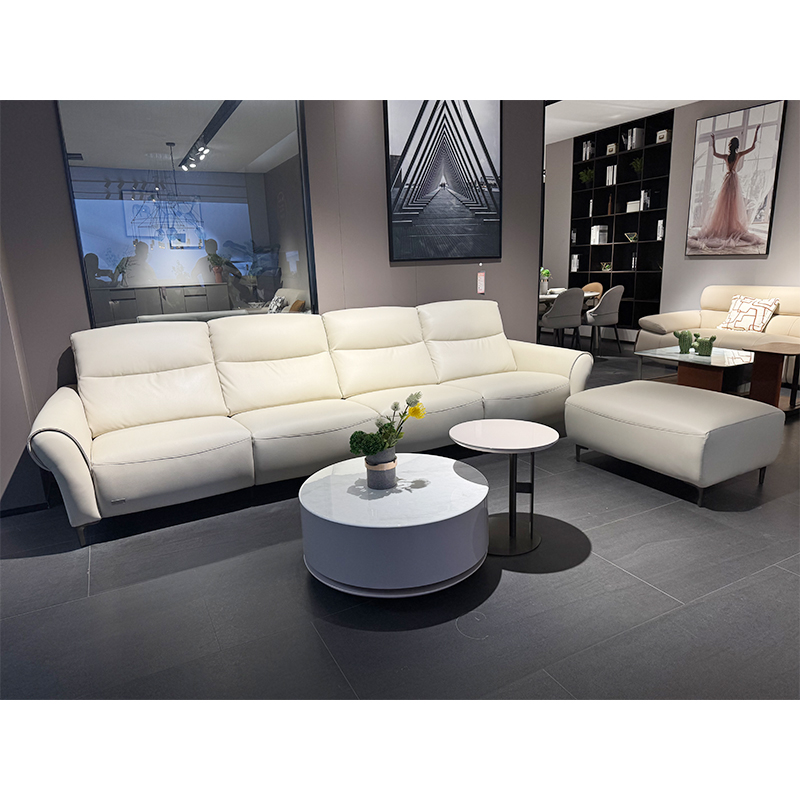
The minimalist sofa first achieves visual lightness through its refined volume. It abandons the high backs, heavy armrests, intricate carvings, or layers of cushions commonly found in traditional sofas, instead adopting a low seat, a slender metal or wooden frame, inward-curving armrests, or even a completely armless open structure. This "subtraction" design language significantly reduces the furniture's presence in the space. When a sofa is no longer a massive object, but rather a light platform or a soft boundary, the line of sight naturally penetrates, and the perception of space expands accordingly. Even with limited space, the living room can present an open and refreshing atmosphere.
Secondly, precise proportion control optimizes the balance between function and floor space. Minimalist sofas don't simply pursue "smallness," but through ergonomic research, they compress depth, height, and width to the most efficient range while ensuring comfortable seat depth and backrest support. For example, the backrest isn't excessively reclined, the cushions aren't redundantly stacked, and the base often uses a suspended or slender leg design, revealing a sense of extension to the ground. These details not only make the sofa itself more compact but also make the surrounding area appear more open. Robotic vacuum cleaners can move freely, children can run safely in front, and daily movement is unimpeded—the "usability" of the space is thus significantly improved.
Furthermore, unified colors and materials enhance the overall cohesion of the space. Minimalist sofas often feature neutral tones—off-white, light gray, oatmeal, or dark charcoal—with matte-finish, water-based, eco-friendly leather surfaces that are non-reflective and free of blemishes. This restrained visual expression avoids a sense of color juxtaposition, allowing the sofa to blend naturally into the walls, floors, and carpets, becoming part of the space rather than an obtrusive focal point. When furniture "retires," human activity and the flow of light become the main focus, and residents no longer feel cramped, but rather experience tranquility and order.
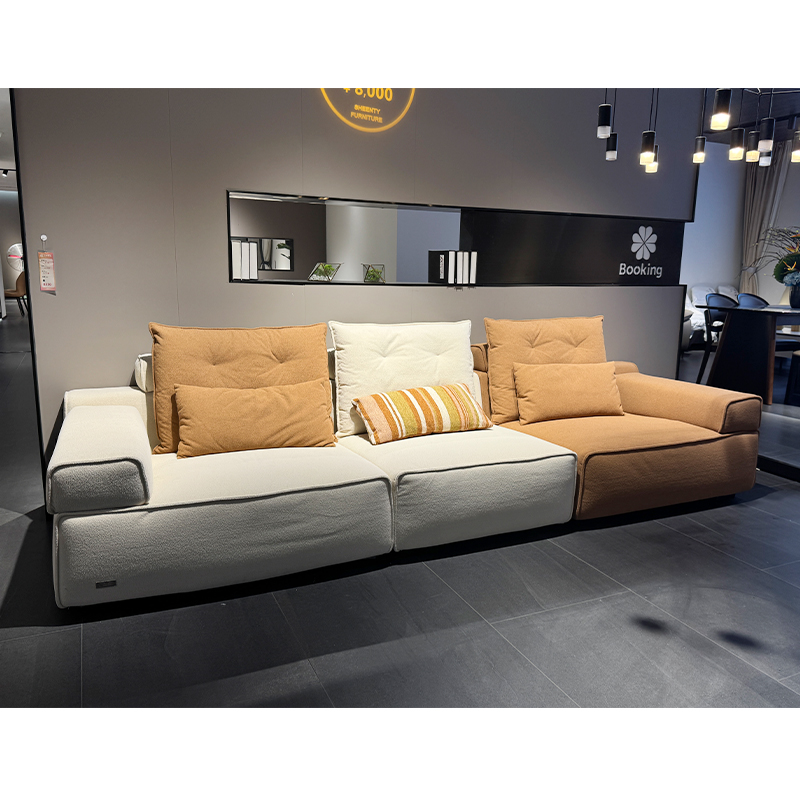
Furthermore, multifunctional potential expands the flexibility of the space. Many minimalist sofa designs are compatible with modular combinations, allowing single and double seats to be freely combined; some models have storage underneath, or the cushions can be removed and reassembled into a temporary guest bed. This flexibility allows the same area to serve as a reception area during the day and a sleeping area at night, meeting the essential need for "multi-functional rooms" in small apartments. The simple shape ensures that no matter how the space is transformed, the overall style remains unified and uncluttered.
Ultimately, the magic of minimalist sofas in unlocking living space doesn't come from drastically reducing physical dimensions, but rather from using design wisdom to dispel the oppressive feeling of furniture and guide the space towards fluidity, openness, and multifunctionality. It uses minimal elements to accommodate the most possibilities of life. When a sofa no longer occupies "space" but invites you to use it, we truly understand the profound value of minimalism—not deprivation, but giving; not emptiness, but freedom. Within a small space, blank space is abundance.
The minimalist sofa first achieves visual lightness through its refined volume. It abandons the high backs, heavy armrests, intricate carvings, or layers of cushions commonly found in traditional sofas, instead adopting a low seat, a slender metal or wooden frame, inward-curving armrests, or even a completely armless open structure. This "subtraction" design language significantly reduces the furniture's presence in the space. When a sofa is no longer a massive object, but rather a light platform or a soft boundary, the line of sight naturally penetrates, and the perception of space expands accordingly. Even with limited space, the living room can present an open and refreshing atmosphere.
Secondly, precise proportion control optimizes the balance between function and floor space. Minimalist sofas don't simply pursue "smallness," but through ergonomic research, they compress depth, height, and width to the most efficient range while ensuring comfortable seat depth and backrest support. For example, the backrest isn't excessively reclined, the cushions aren't redundantly stacked, and the base often uses a suspended or slender leg design, revealing a sense of extension to the ground. These details not only make the sofa itself more compact but also make the surrounding area appear more open. Robotic vacuum cleaners can move freely, children can run safely in front, and daily movement is unimpeded—the "usability" of the space is thus significantly improved.
Furthermore, unified colors and materials enhance the overall cohesion of the space. Minimalist sofas often feature neutral tones—off-white, light gray, oatmeal, or dark charcoal—with matte-finish, water-based, eco-friendly leather surfaces that are non-reflective and free of blemishes. This restrained visual expression avoids a sense of color juxtaposition, allowing the sofa to blend naturally into the walls, floors, and carpets, becoming part of the space rather than an obtrusive focal point. When furniture "retires," human activity and the flow of light become the main focus, and residents no longer feel cramped, but rather experience tranquility and order.
Furthermore, multifunctional potential expands the flexibility of the space. Many minimalist sofa designs are compatible with modular combinations, allowing single and double seats to be freely combined; some models have storage underneath, or the cushions can be removed and reassembled into a temporary guest bed. This flexibility allows the same area to serve as a reception area during the day and a sleeping area at night, meeting the essential need for "multi-functional rooms" in small apartments. The simple shape ensures that no matter how the space is transformed, the overall style remains unified and uncluttered.
Ultimately, the magic of minimalist sofas in unlocking living space doesn't come from drastically reducing physical dimensions, but rather from using design wisdom to dispel the oppressive feeling of furniture and guide the space towards fluidity, openness, and multifunctionality. It uses minimal elements to accommodate the most possibilities of life. When a sofa no longer occupies "space" but invites you to use it, we truly understand the profound value of minimalism—not deprivation, but giving; not emptiness, but freedom. Within a small space, blank space is abundance.