


Minimalist Cotton and Linen Bed: Sleep Aesthetics in Natural Textures
Release Time : 2026-02-18
In the fast-paced urban life, the bedroom has gradually evolved from a simple space for rest into a spiritual haven where people seek inner peace and the true essence of life. Minimalist design, with its "less is more" philosophy, has become the mainstream direction of contemporary home aesthetics. The minimalist cotton and linen bed not only fulfills functional needs but also redefines the texture and warmth of modern sleep spaces with its natural textures and restrained aesthetics.
1. Material Dialogue: Harmonious Coexistence of Eco-friendly Leather and Natural Cotton and Linen
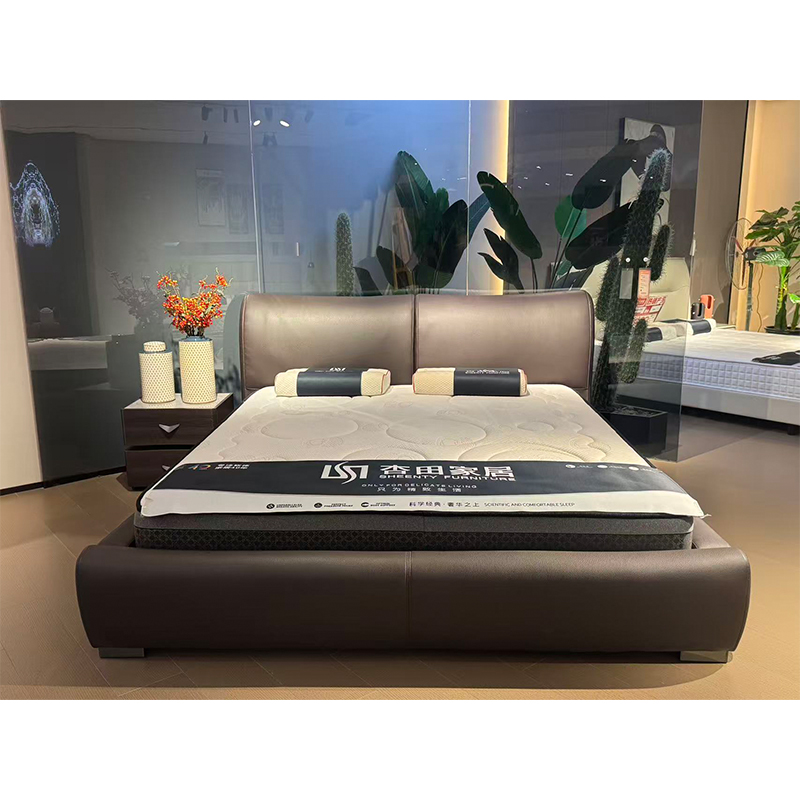
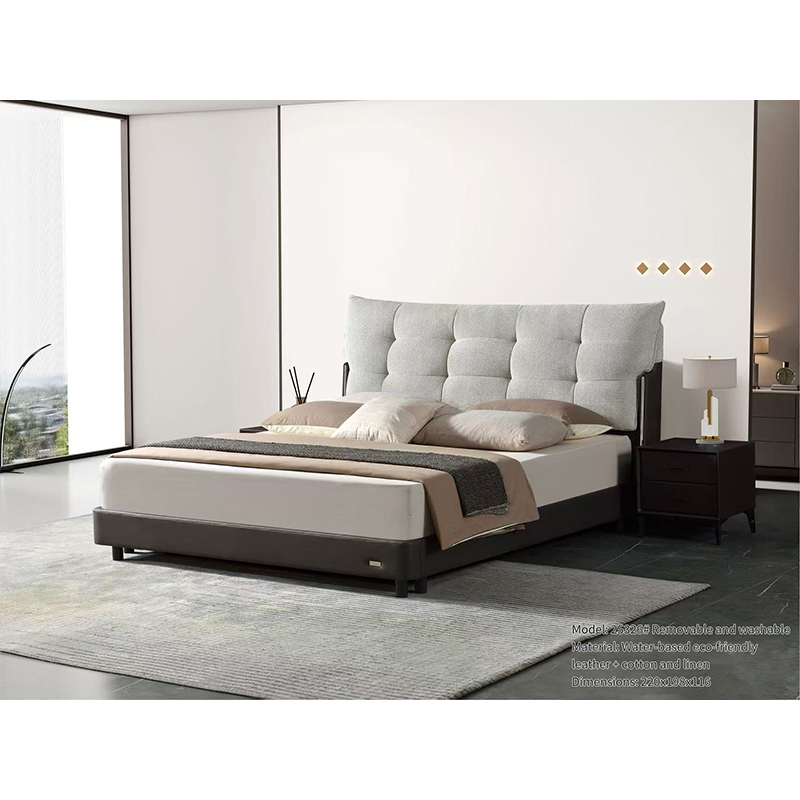
The uniqueness of this bed lies in its precise control over the language of materials. The bed frame and headboard are wrapped in water-based eco-friendly leather—unlike traditional solvent-based synthetic leather, water-based leather releases almost no harmful volatile substances during production, offering a supple and subtly shimmering texture, presenting an understated sense of luxury. The mattress cover and bed surround extensively use a natural cotton and linen blend: cotton provides a soft, skin-friendly feel, while linen offers a crisp texture and natural breathability. The two materials create a subtle visual contrast—the warm, understated elegance of leather complements the rough, rustic texture of cotton and linen, avoiding the looseness of an all-fabric look while softening the harshness of a full leather ensemble, resulting in a balanced visual aesthetic.
2. Removable and Washable: Practical Wisdom Underneath Minimalism
True minimalism never comes at the expense of functionality. The cotton and linen sections of this bed feature a modular, removable design, easily detachable via hidden zippers or snaps, and suitable for regular machine washing. This seemingly simple detail greatly enhances the convenience of daily maintenance—whether it's spilled milk, pet hair, or deep cleaning for seasonal changes, users can quickly restore the bedding to its original cleanliness. This "easy-to-clean, easy-to-replace" concept allows minimalist design to truly integrate into real-life scenarios, rather than remaining an idealized showcase in a showroom. Furthermore, the replaceable cotton and linen cover allows users to change colors according to their mood or the season, maintaining a subtle personal expression within the minimalist space.
3. High-Side Structure: A Dual Consideration of Security and Aesthetic Proportion
The bed features a moderately raised edge design around its perimeter. This "high-side" structure visually creates a soft, enveloping feel, reinforcing the bed's image as a "sleep container." Functionally, the high edge effectively prevents the bedding from slipping off, making it especially suitable for those who prefer a curled-up sleeping position. Aesthetically, it, along with the low headboard and clean lines, forms a stable geometric silhouette, aligning with minimalism's pursuit of proportion and order. More importantly, the combination of the high edge and the drape of the cotton and linen fabric creates natural folds and play of light and shadow, breaking the monotony of a flat surface and adding interest to simplicity.
4. Sleep Aesthetics in Natural Texture: Returning to Bodily Sensation
The ultimate value of the minimalist cotton and linen bed lies in awakening one's sense of body and nature. Cotton and linen fibers, untreated by excessive chemicals, retain the original texture and aroma of the plants, feeling cool to the touch without being cold, wicking away moisture and suitable for all seasons. Water-based leather, on the other hand, has no pungent odor and develops a warm patina with use, becoming increasingly in tune with the wear and tear of life. When one lies on it, the roughness and smoothness, the coolness and warmth, the support and envelopment intertwine to create a "breathable" experience—this is the core of contemporary sleep aesthetics: not relying on elaborate decorations to please the eye, but on the authenticity of materials to soothe the mind and body.
The minimalist cotton and linen bed is far more than just a piece of furniture; it's a materialized expression of a lifestyle. It practices sustainability with environmentally friendly materials, responds to real needs with a washable design, and creates a sense of psychological security through its high-sided structure. Ultimately, within the natural textures of cotton, linen, and leather, it constructs a tranquil corner for peaceful sleep. In this age of information overload, the significance of a good bed may lie in allowing us to rediscover the true essence of sleep through the simplest of tactile sensations.
1. Material Dialogue: Harmonious Coexistence of Eco-friendly Leather and Natural Cotton and Linen
The uniqueness of this bed lies in its precise control over the language of materials. The bed frame and headboard are wrapped in water-based eco-friendly leather—unlike traditional solvent-based synthetic leather, water-based leather releases almost no harmful volatile substances during production, offering a supple and subtly shimmering texture, presenting an understated sense of luxury. The mattress cover and bed surround extensively use a natural cotton and linen blend: cotton provides a soft, skin-friendly feel, while linen offers a crisp texture and natural breathability. The two materials create a subtle visual contrast—the warm, understated elegance of leather complements the rough, rustic texture of cotton and linen, avoiding the looseness of an all-fabric look while softening the harshness of a full leather ensemble, resulting in a balanced visual aesthetic.
2. Removable and Washable: Practical Wisdom Underneath Minimalism
True minimalism never comes at the expense of functionality. The cotton and linen sections of this bed feature a modular, removable design, easily detachable via hidden zippers or snaps, and suitable for regular machine washing. This seemingly simple detail greatly enhances the convenience of daily maintenance—whether it's spilled milk, pet hair, or deep cleaning for seasonal changes, users can quickly restore the bedding to its original cleanliness. This "easy-to-clean, easy-to-replace" concept allows minimalist design to truly integrate into real-life scenarios, rather than remaining an idealized showcase in a showroom. Furthermore, the replaceable cotton and linen cover allows users to change colors according to their mood or the season, maintaining a subtle personal expression within the minimalist space.
3. High-Side Structure: A Dual Consideration of Security and Aesthetic Proportion
The bed features a moderately raised edge design around its perimeter. This "high-side" structure visually creates a soft, enveloping feel, reinforcing the bed's image as a "sleep container." Functionally, the high edge effectively prevents the bedding from slipping off, making it especially suitable for those who prefer a curled-up sleeping position. Aesthetically, it, along with the low headboard and clean lines, forms a stable geometric silhouette, aligning with minimalism's pursuit of proportion and order. More importantly, the combination of the high edge and the drape of the cotton and linen fabric creates natural folds and play of light and shadow, breaking the monotony of a flat surface and adding interest to simplicity.
4. Sleep Aesthetics in Natural Texture: Returning to Bodily Sensation
The ultimate value of the minimalist cotton and linen bed lies in awakening one's sense of body and nature. Cotton and linen fibers, untreated by excessive chemicals, retain the original texture and aroma of the plants, feeling cool to the touch without being cold, wicking away moisture and suitable for all seasons. Water-based leather, on the other hand, has no pungent odor and develops a warm patina with use, becoming increasingly in tune with the wear and tear of life. When one lies on it, the roughness and smoothness, the coolness and warmth, the support and envelopment intertwine to create a "breathable" experience—this is the core of contemporary sleep aesthetics: not relying on elaborate decorations to please the eye, but on the authenticity of materials to soothe the mind and body.
The minimalist cotton and linen bed is far more than just a piece of furniture; it's a materialized expression of a lifestyle. It practices sustainability with environmentally friendly materials, responds to real needs with a washable design, and creates a sense of psychological security through its high-sided structure. Ultimately, within the natural textures of cotton, linen, and leather, it constructs a tranquil corner for peaceful sleep. In this age of information overload, the significance of a good bed may lie in allowing us to rediscover the true essence of sleep through the simplest of tactile sensations.